Practical Water Quality Solutions Can Come From Communities
A new model of river guardianship is developing along the Lower Mekong, powered by citizen science, youth innovation, and local knowledge. Can we scale it up?
Last year, concerns over arsenic contamination in the Kok, Tributary River of the Mekong River in Thailand triggered a series of regional meetings, intensified monitoring efforts, and cross-border discussions involving multiple countries and sectors. The issue underscored the need to address the ramifications on the Mekong River, the exposed vulnerability of a shared river system and the complexity of protecting it.
It also revealed a challenge that the issue cannot be resolved by mere technical monitoring. Concerted efforts are needed to address this issue across the stretch of this river.
So, who else can help to fill the gaps?
Increasingly, communities themselves are becoming part of the answer.
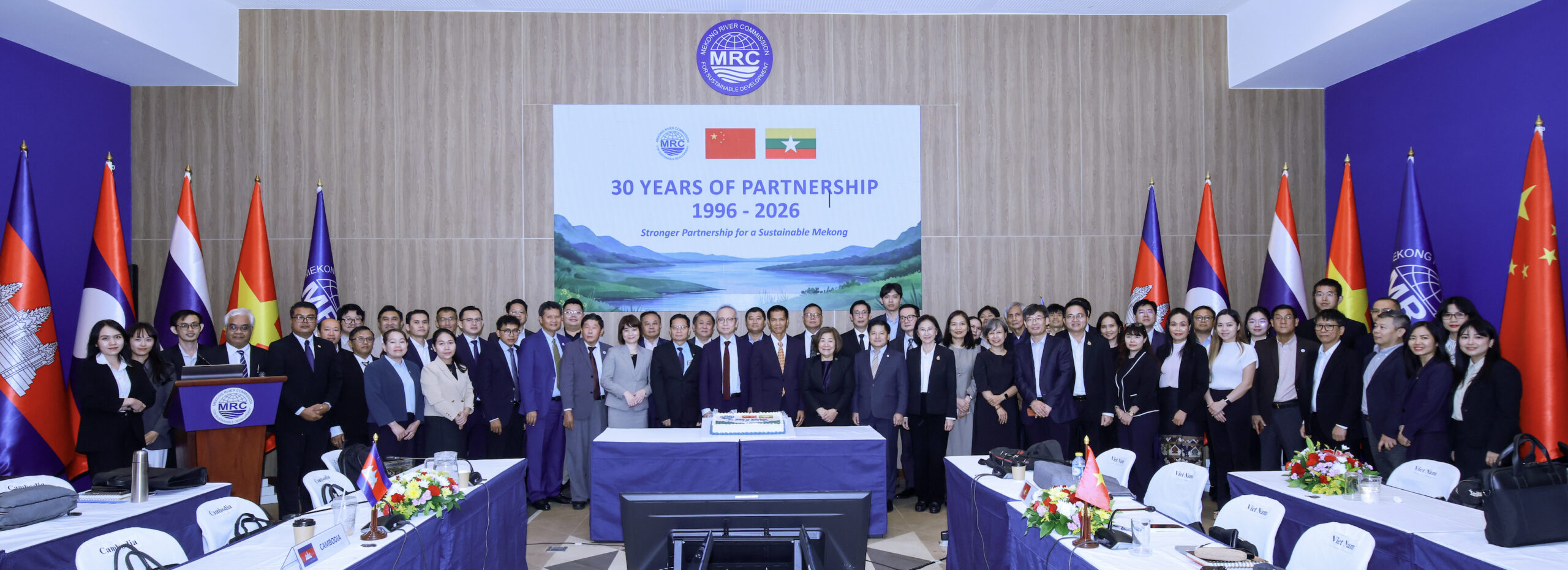
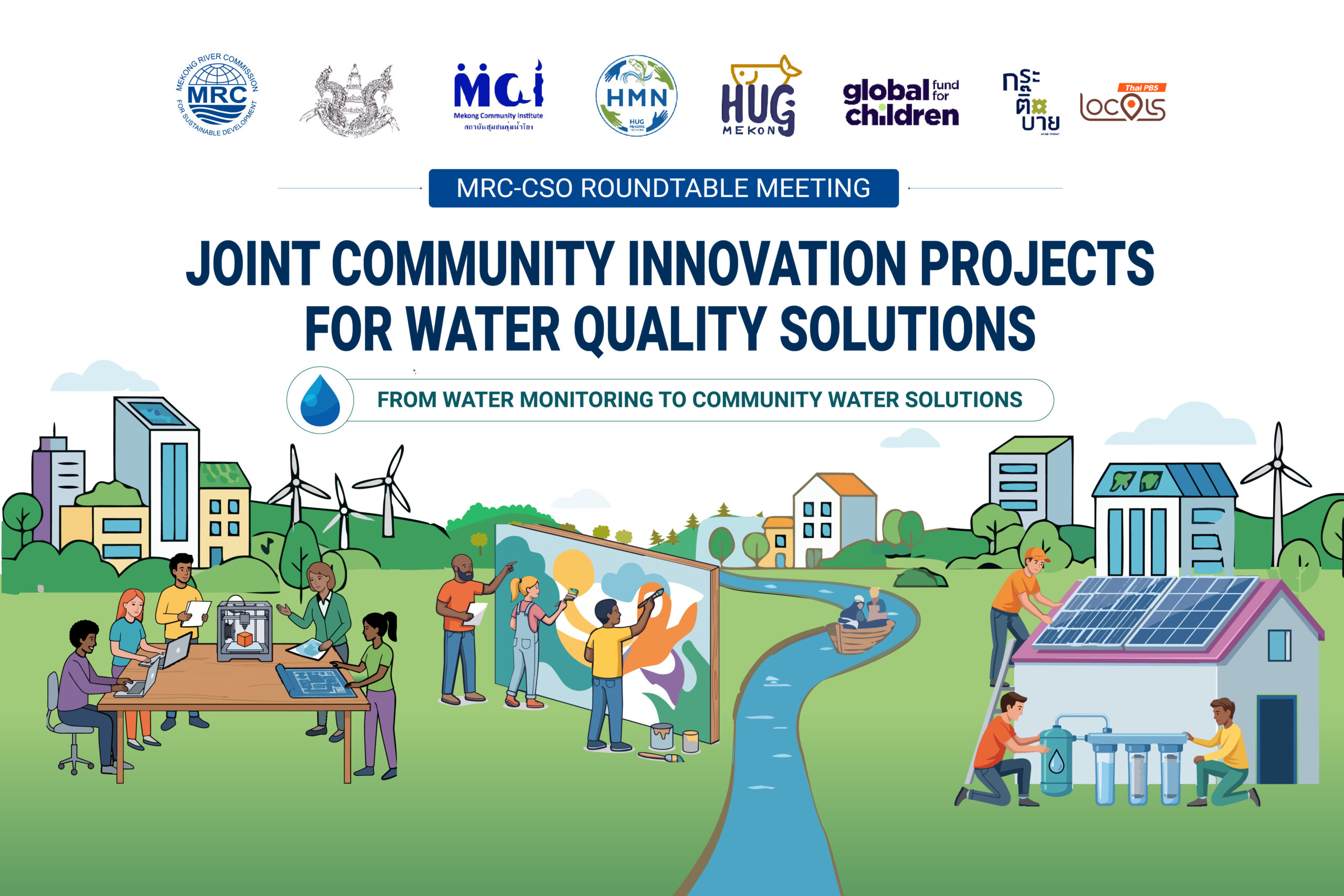
Recognising this potential, the Mekong River Commission (MRC) Secretariat and Thailand’s ComNet Mekong recently co-organised the MRC-CSO Roundtable Meeting on Joint Community Innovation Projects for Water Quality Solutions, where 70 participants across the Lower Mekong Basin explored how communities, civil society organisations, and young people can work together to protect one of the world’s most important rivers.
The roundtable produced more ambitious results other than just another discussion about environmental challenges.
It sought practical solutions designed by the people living along the river.
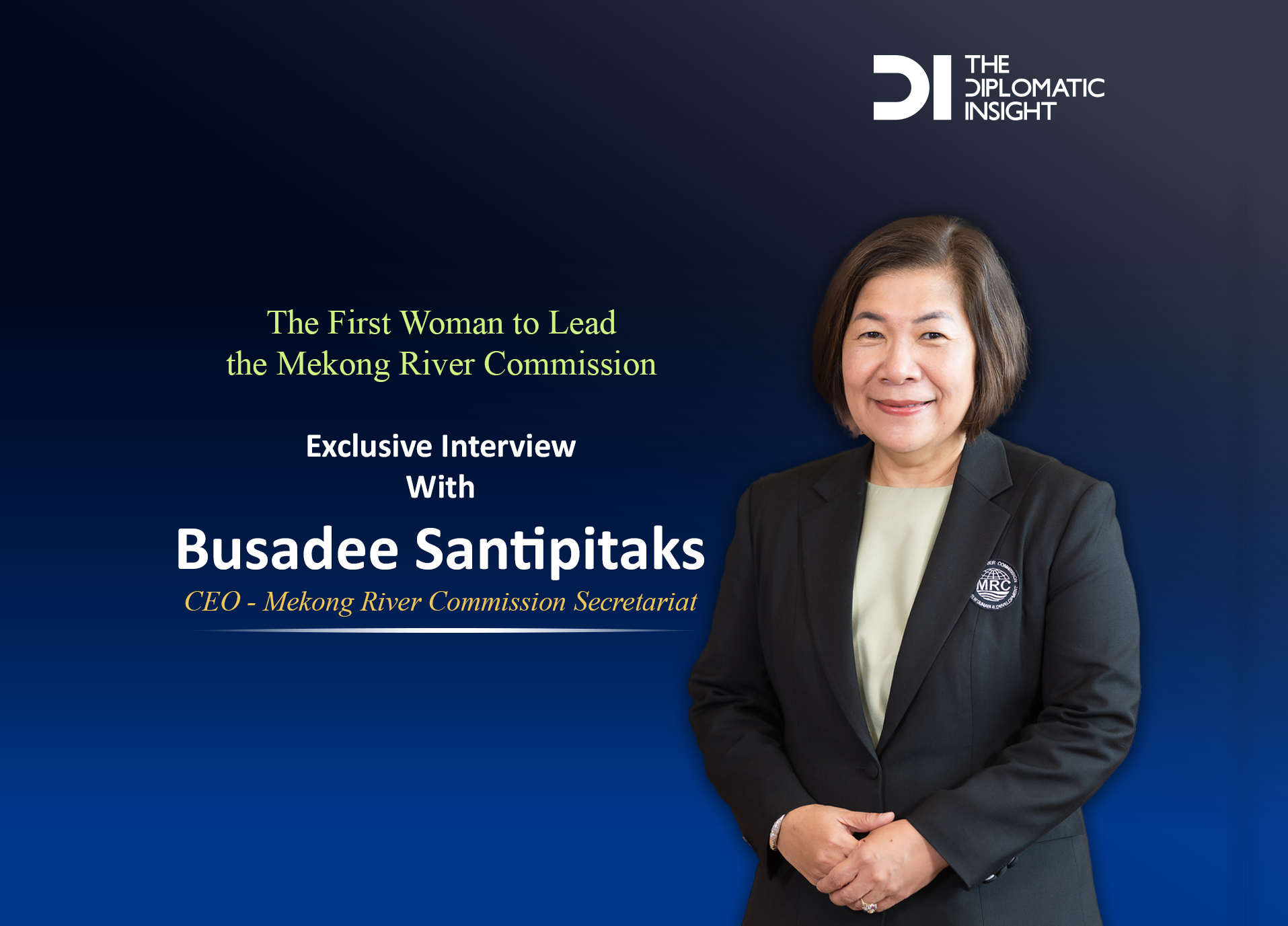
“We must find practical solutions based on small but impactful steps,” said Ms Busadee Santipitaks, Chief Executive Officer of the MRC Secretariat. “While we often wait for large, systemic solutions, such as new policies, major infrastructure, regional agreements which are largely state responsibilities, let us turn around and look for some innovative and powerful ideas that we can share at the community level.”
For Ombun Thipsuna, President of Thailand’s ComNet Mekong, creating opportunities for those conversations was just as important as the solutions themselves.
“It provided an opportunity for us to discuss and communicate our concerns,” she said. “The event was a safe space where we could talk about our worries and the problems in the wetlands in a friendly, trusting and constructive way with various sectors.” She added that bringing together communities, civil society organisations, youth representatives, and regional institutions helps build the trust needed to turn local concerns into collective action.
One idea repeatedly surfaced throughout the discussions is citizen science.
At its simplest, citizen science means ordinary people participating in the collection and sharing of information.
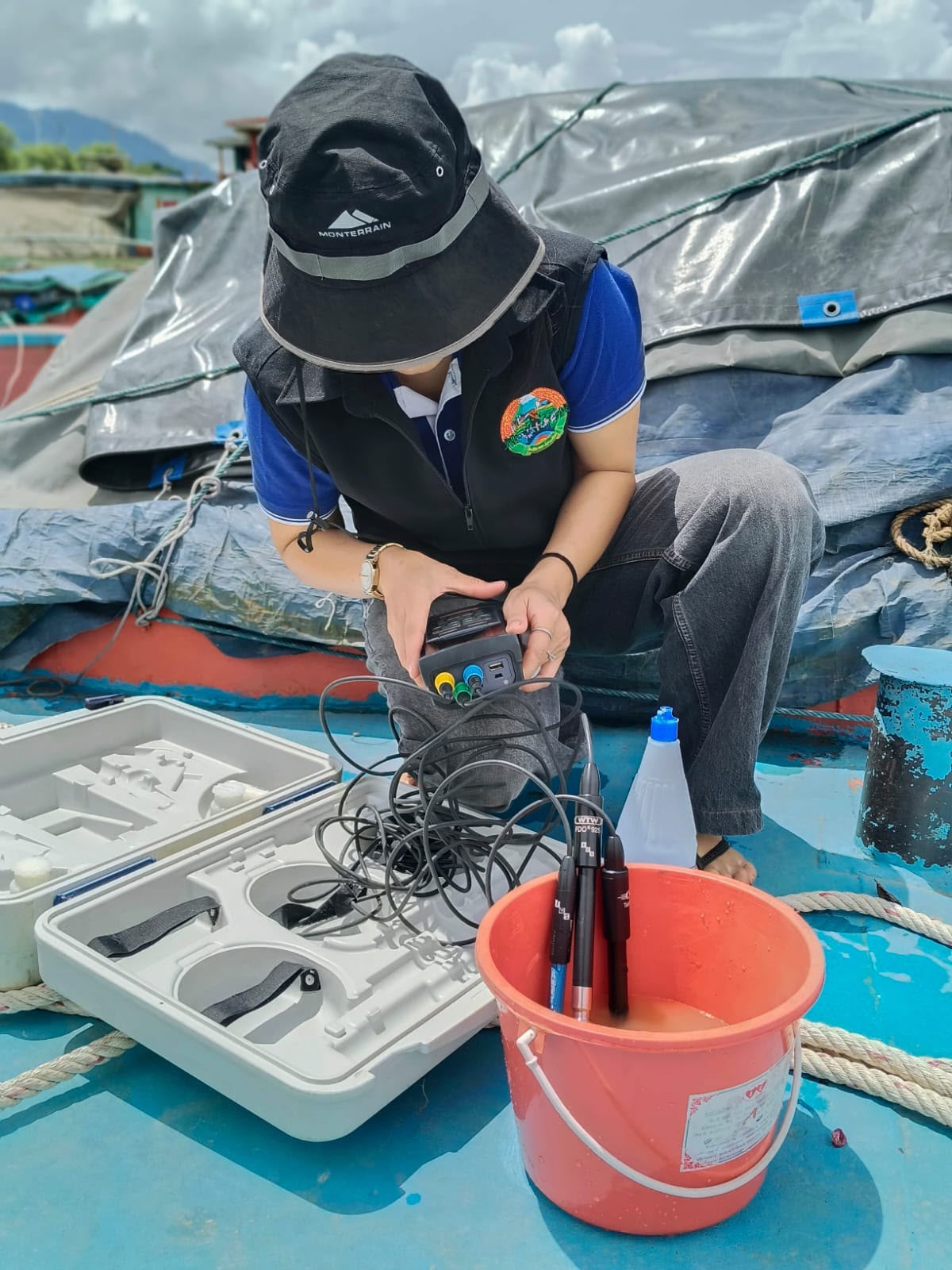
For water quality, that process can involve communities monitoring local waterways, recording observations, collecting samples, or contributing information that complements and supports official data and findings.
The value is not that communities replace scientists. The value is that they expand the reach of science.
Through the Hug Mekong Youth network, youth groups have collected and monitored water and have used movies, photos, social media, community stories, and other creative media to document river life, share local concerns, and make water issues more accessible to wider audiences.
Across the Mekong Basin, it is uplifting to see that young people are already showing what that can look like in practice. In Cambodia, a youth representative proposed connecting schools, markets, and households to reduce waste before it reaches local waterways. In Lao PDR, youth-led “River Guardians” would be trained to monitor river conditions, report risks, and support local preparedness. In Thailand, a simplified river survey method aims to make monitoring more accessible to citizen scientists and community volunteers. Further downstream in Viet Nam, a student explored how community salinity measurements could be combined with forecasting tools to help farmers respond to saltwater intrusion.
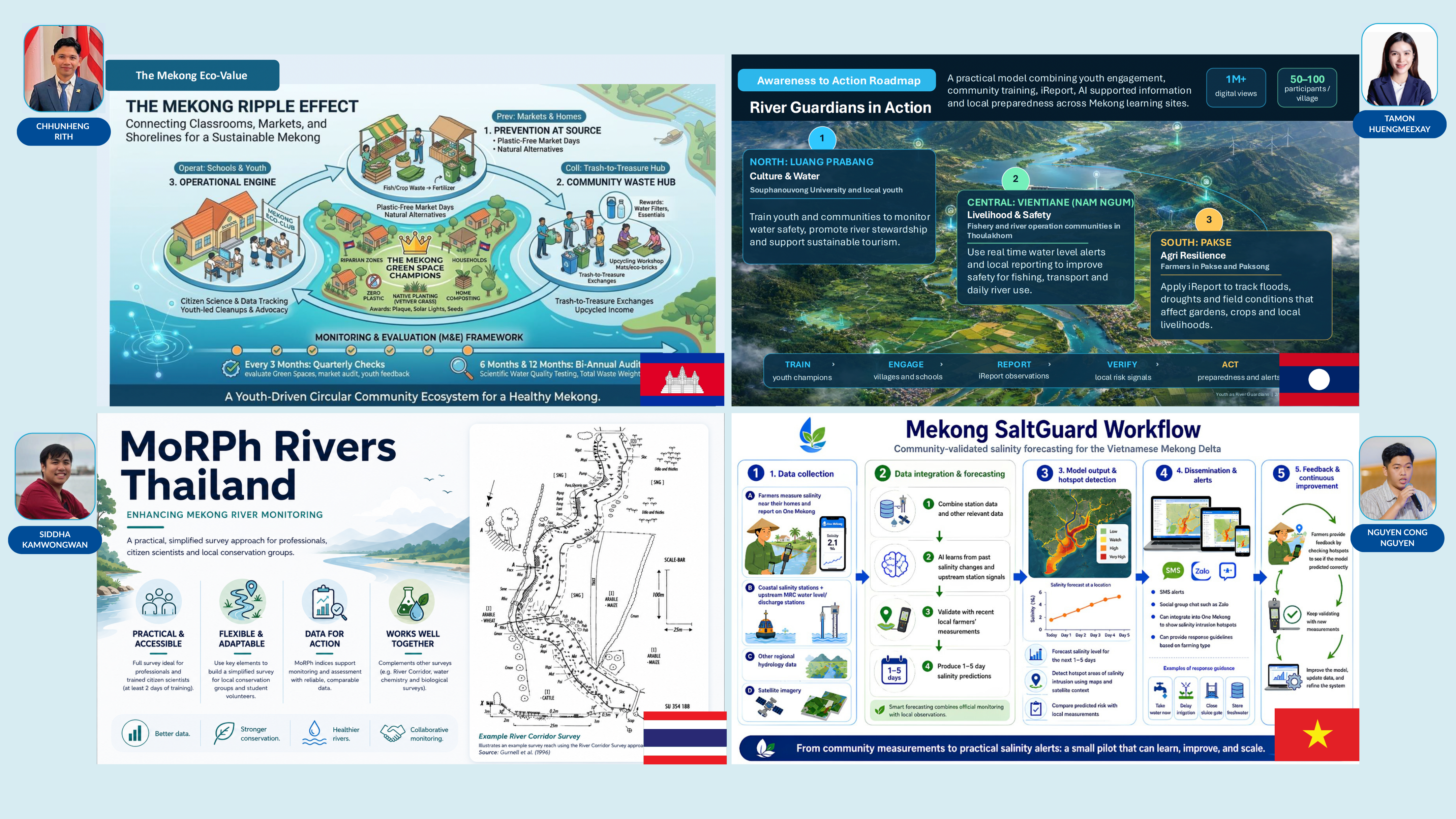
Different countries. Different challenges. Yet all the four ideas emerged around the same principle. Local people can become active contributors to river knowledge and river protection.
An important question remains: How can we scale it up?
A successful project in one village does not automatically translate across an entire river basin. Local initiatives require resources, coordination, training, and sustained support if they are to deliver long-term results.
Participants acknowledged these challenges openly. Yet many argued that scaling does not necessarily mean replicating the same solution everywhere.
Instead, it means creating conditions that allow communities to develop solutions that fit their own circumstances while remaining connected through broader regional networks.
As a regional platform for cooperation, dialogue, data sharing, and technical exchange, the MRC can help bring together Member Countries, civil society organisations, youth networks, research partners, and communities to test practical ideas, share lessons, and identify approaches that may be adapted across different local contexts.
In that sense, the future may not depend on finding one perfect answer. It may depend on enabling hundreds of locally driven answers to emerge.
The conversations at the roundtable pointed towards another reality.
Communities are no longer asking to be consulted after decisions are made. They are asking to be part of the solution.
And increasingly, they already are.
Whether through a youth-led monitoring project, a community water-testing initiative, or citizen observations shared across borders, local people are helping build a new model of river guardianship.
For the MRC, providing the space and supporting this momentum means giving communities and young people with regular opportunities to contribute to basin knowledge, innovation, and cooperation. Linked with the MRC’s youth engagement priorities and its Strategic Plan 2026-2030, these opportunities can help ensure that local voices are not only heard but also connected to wider efforts to protect the Mekong for present and future generations.
Perhaps the most important question is not how much communities can contribute.
Rather, it is for us to find the opportunities for them.