Hydropower
The Mekong River is a driver of economic growth, supporting the lives of millions by providing energy, food, water, and incomes. Yet growth depends on the river’s health and demands energy. Energy demand for the Lower Mekong River Basin (LMB) is projected to grow at 6-7% annually, and riparian countries are capitalising on hydropower potential.
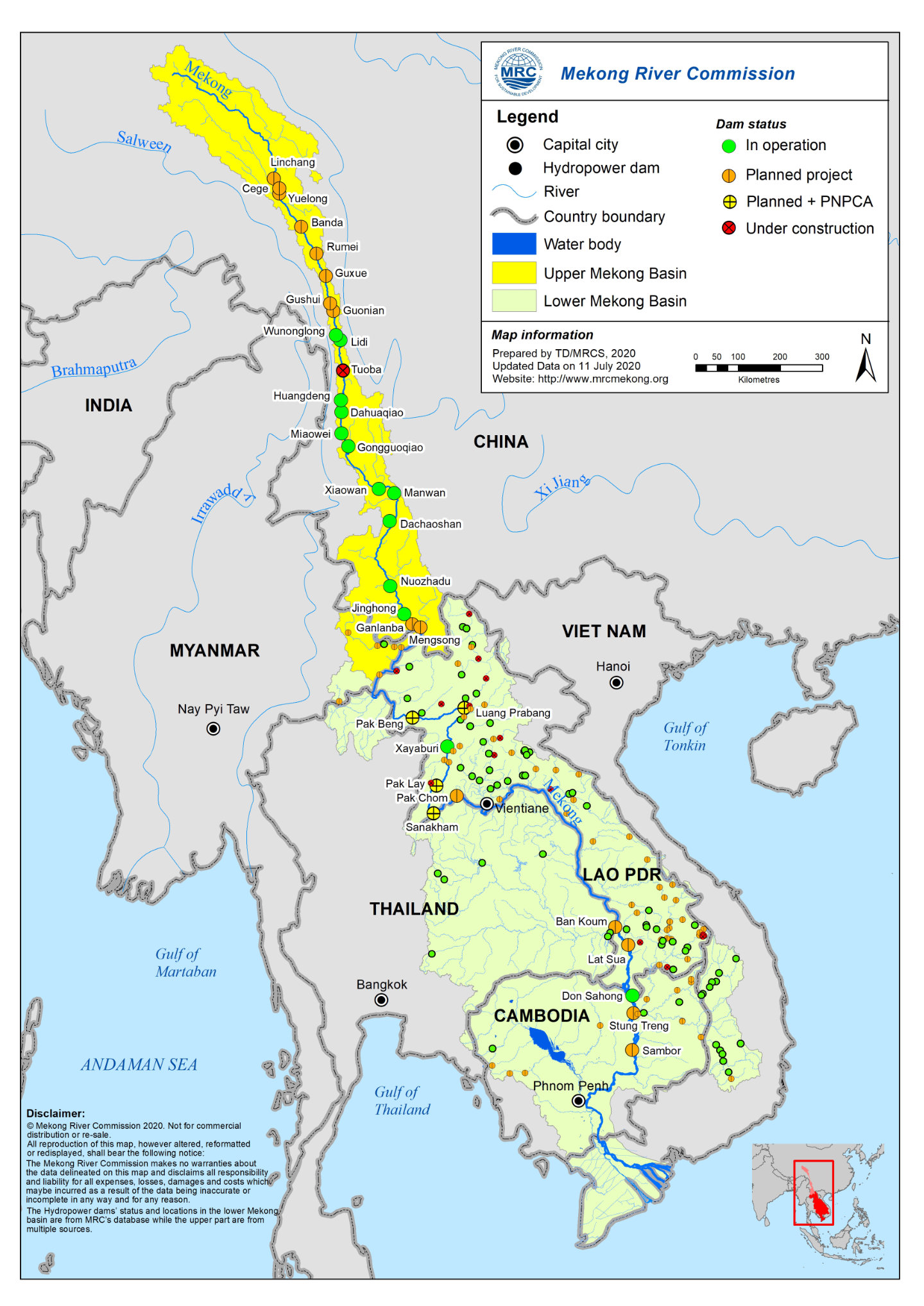
Hydropower development in the Mekong began years ago in tributary basins of Thailand and Viet Nam, upstream of Cambodia. Over the last decade, hydropower development has expanded in the LMB, accompanied by increased private sector investment in power infrastructure. On the mainstream, 11 projects are planned, with seven in Lao PDR, two in Cambodia and 2 across the Lao-Thai border. Of these, two – Xaiyaburi and Don Sahong - have become operational and four more have been notified to the MRC for Prior Consultation Process.
As of 2019, the number of hydropower projects in the lower basin is 89 with 12,285 MW total installed capacity. Of these, two are in Cambodia (401 MW installed capacity), 65 in Lao PDR (8,033 installed capacity), 7 in Thailand (1,245 installed capacity) and 14 in Viet Nam (2,607 installed capacity). 14 dams with a total capacity of 3,000 MW are expected to come on line during 2016-2020, while 30 others are in the planning stage with the majority finalising Feasibility Studies. By 2040, hydropower is estimated to generate more than 30,000 MW (see Figure 1).
Hydropower development in the LMB brings both positive and negative consequences. According to the MRC Council Study on the Sustainable Management and Development of the Mekong River Basin including Impacts of Mainstream Hydropower Projects, the LMB could see economic gains from full hydropower development of more than $160 billion by 2040. Development of hydropower brings synergies with other water related sectors as well, including expanding irrigation that is key to food security, provides access to electricity that is key to poverty reduction, contributes to navigation that enhances regional trade, and provides flood management and drought relief that is important part of adapting to climate change.
But those benefits come with potential costs. The decline of fisheries could cost nearly $23 billion by 2040. The loss of forests, wetlands, and mangroves may cost up to $145 billion. With further reduction of sediment due to dams and sand mining, rice growth along the Mekong will be severely curtailed. Fish farms, irrigation schemes, and expanding agriculture could offset these losses, although with uneven results between countries.
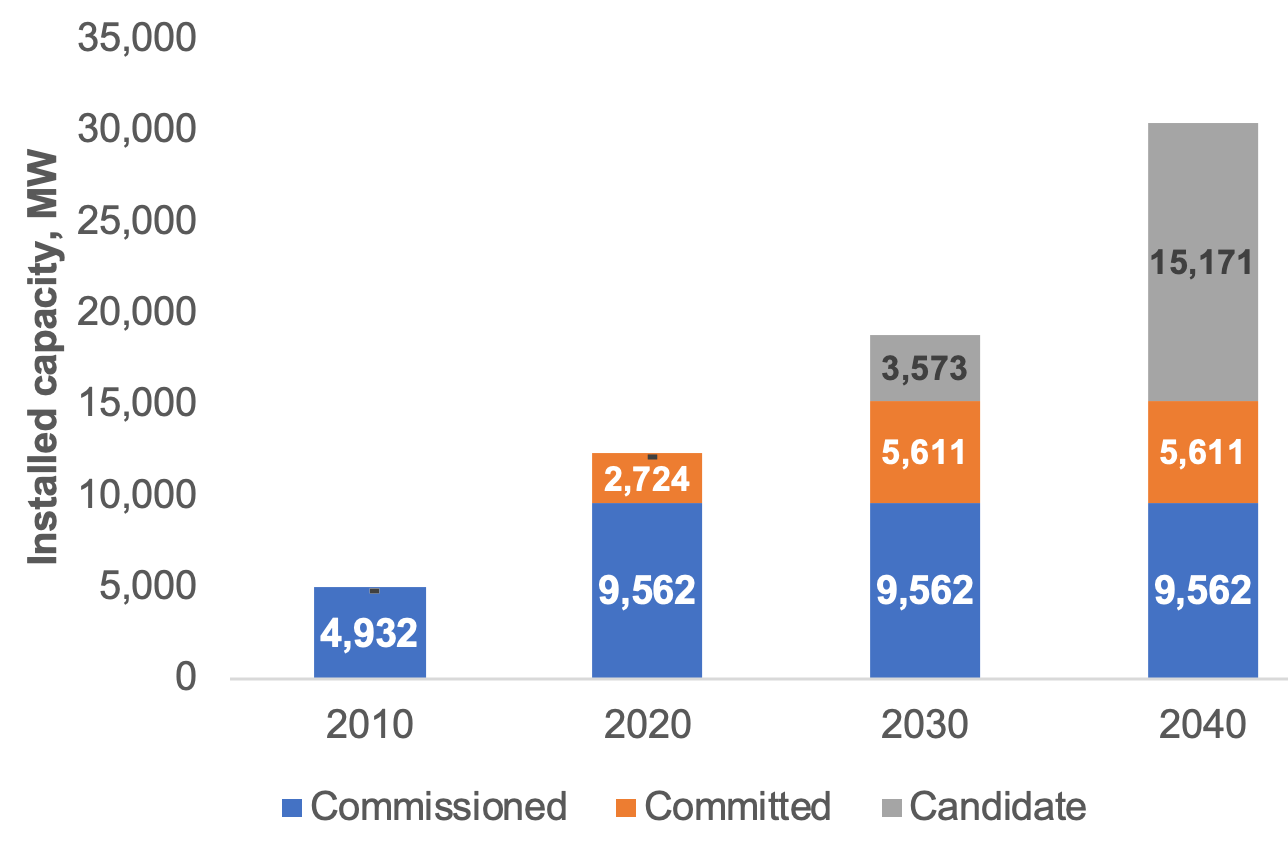
Figure 1: Commissioned, committed and potential hydropower projects
In the Upper Mekong River Basin (UMB), extensive hydropower development has also occurred as part of China’s development strategy. China has constructed 11 hydropower dams, of which two are large storage dams, along the mainstream in the Upper Mekong Basin. Another 11 dams, each with production capacity of over 100 MW, are being planned or constructed. The total production capacity is estimated at 31,605 MW, increasing from 21,310 MW. The overall economic value of hydropower in the UMB-China is estimated at US$ 4 billion per year. The UMB-China dam cascade (see Figure 2) has led to significant increases in dry season flows, considerable reductions of wet season flows, and impacted the sediment budget of the Mekong River system.
Although on a much smaller scale, hydropower is starting to be developed in a tributary of the UMB-Myanmar, with the first dam commissioned in 2017 and construction of further dams by both Chinese and Myanmar developers expected.
In response to this dynamic situation, the Mekong River Commission (MRC) focuses on advancing regional cooperation for the sustainable management of the growing number of hydropower projects from a river basin management perspective. The MRC supports countries through:
- Basin-wide strategies such as the Basin Development Strategy and the Sustainable Hydropower Development Strategy that seek to optimise national plans and reduce regional costs.
- MRC Procedures such as Notification and Prior Consultation that independently reviews individual projects, facilitate information sharing and consultation with all member states and the public.
- Technical guidelines such as the Preliminary Design Guidance for mainstream dams that seeks to avoid, minimise and mitigate adverse impacts of individual projects.
- Studies and assessments that support planning and decision making.
- Monitoring regimes that tract impacts in order to support adaptive management and public information.
In the hydropower sector, the MRC is tasked to help ensure that increasing demand for electric energy in the Member Countries is met without causing detrimental effects on the environment or local communities – an aim which requires a hydropower strategy that is based on best practices.
The first Hydropower Development Strategy (HDS) was formulated in 2001 in recognition of the MRC’s role as a river basin organisation for regional co-operation on sustainable hydropower development, utilisation, and management in the Mekong River Basin. Through the HDS, a variety of studies, guidelines, and tools were developed to provide guidance for the MRC’s involvement in hydropower development activities.
In 2008, the Initiative on Sustainable Hydropower (ISH) was established to advance regional cooperation and assist the Member Countries in relating decisions on hydropower management and development to basin-wide Integrated Water Resources Management (IWRM) perspectives. The Initiative developed knowledge platforms and networks enabling the Member Countries to routinely exchange information, share experiences, and collaborate on tools and practices in sustainable hydropower (see below).
The MRC Strategic Plan (SP) 2016-2020 underlined the rising sense of urgency among stakeholders for the need to move basin development towards more optimal and sustainable outcomes that could address long-term needs, including environmental protection as well as ensuring water, food and energy security. In order to achieve these goals, the Member Countries agreed to update the HDS 2001 by taking into account major changes in the basin that had occurred over the last 18 years. The update strategy, now called the Sustainable Hydropower Development Strategy (SHDS), also identifies opportunities to enhance benefits beyond national borders and minimise adverse transboundary impacts. The SHDS, expected to be finalised in 2021. An agreed set of strategic priorities and actions will be implemented to ensure delivery of the SHDS objectives.
In addition, the updated Preliminary Design Guidance (PDG) for Proposed Mainstream Dams in the LMB (2009) is being finalised to provide design guidance in the form of performance targets, design, and operating principles for impact mitigation measures in key areas reflecting the current hydropower development situation and international good practice. The updated PDG formed the basis for the development of guidelines for hydropower environmental impact mitigation and risk management in the lower Mekong mainstream and tributaries.
Since there is potential for further development of hydropower in the Mekong Basin, the Basin Development Strategy (BDS) 2021-2030 and MRC SP 2021-2025, promotes the concentration of hydropower development in storage-backed cascades to: (i) increase dry season flows and power generation, (ii) provide reliable flows to downstream run-of-river hydropower facilities and improve their performance, (iii) reduce downstream flood and drought risks and enhance dry season navigation, and (iv) create opportunities to forego hydropower development in still undeveloped watersheds with high ecological value.
In relation to measures to mitigate the adverse impacts from water resources development, the MRC will continue to work with countries to integrate the various regional products developed over recent years into national systems. For instance, the Transboundary Environmental Impact Assessment (TbEIA) guidelines into national policy and regulations, and the updated PDG into the planning and management of hydropower.
Over the years, the MRC has conducted the following key assessments and studies related to hydropower:
- Strategic Environmental Assessment of hydropower on the Mekong mainstream 2010 (SEA): The SEA reviews 12 proposed hydropower schemes to identify opportunities and long-term implications the mainstream dam proposals may have on the livelihoods of millions of people in the LMB. It also provides recommendations on how the proposed projects should be best pursued by the Member Countries while calling for the assurance of equitable development benefits at national and local levels. The SEA was commissioned by the ISH but independently carried out by the International Center for Environmental Management (ICEM).
- Assessment of Basin-wide Development Scenarios 2011 (Basin Development Plan Phase 2): The BDP assesses the cumulative impacts of ongoing and planned water resources development in the Mekong River Basin, including two major sectors of hydropower and irrigation development. It also assesses the national water resources development plans of the Member Countries against an agreed range of economic, environmental and social assessment indicators. The assessment results demonstrate the synergies and trade-offs between water, energy, food, environmental and climate security.
- The Study on sustainable management and development of the Mekong River, including impacts of mainstream hydropower projects (Council Study): Hydropower is one of the six thematic sectors featured in the Council Study. It assesses the environmental and social risks, impacts, and benefits of existing and planned hydropower developments and their impacts on other sectors. As all three studies assess the existing national plans of the countries, the Council Study confirms general findings of the SEA and BDP2 but contains different nuances, updates and recommendations.
Armed with extensive knowledge on the benefits and adverse impacts of hydropower development, the MRC has developed the following guidelines and tools to assist the Member Countries in achieving a balance between hydropower development, including dam design and operation, and transboundary environment protection requirements.
- Preliminary design guidance for proposed mainstream dams in the LMB (2009): This provides initial design guidance in the form of performance targets, design, and operating principles for impact mitigation measures in key areas such as hydrology, sediment, water quality, fisheries, navigation and dam safety. It may be used by developers during project preparation and then by the MRC to assess projects through its Procedure for Notification, Prior Consultation and Agreement (PNPCA). The PDG is being updated to reflect the current hydropower development situation and international good practice.
- Rapid basin-wide hydropower sustainability assessment tool (RSAT, 2016): Initially developed with ADB and WWF, the RSAT is a multi-stakeholder dialogue and assessment tool designed to consider hydropower sustainability issues in a river basin context. It has the potential to help identify development strategies, institutional responses and management measures that can be deployed to realise the benefits of hydropower development and reduce risks in a river basin context.
- Guidelines for hydropower environmental impact mitigation and risk management in the lower Mekong mainstream and tributaries (2019: The guidelines detail the application of regional and global “good industry practice” for planning, feasibility, design, construction and operation stages of hydropower projects and mitigation of hydropower impacts in the Mekong context.
- Guidelines for the evaluation of hydropower and multipurpose project portfolios (2015): The guidelines propose a portfolio planning process with associated tools for valuation and evaluation of hydropower and multipurpose dam project portfolios. They assist Member Countries in basin planning and energy/hydropower planning frameworks.
- Guidance on national-to-local benefit and cost sharing options for hydropower on Mekong tributaries (2014): The guidance examines different benefit-sharing mechanisms to plan and implement hydropower projects, incorporating all types of benefit sharing in a systematic and coherent way both nationally and transboundary.
- Scoping Report of Regional Benefit Sharing in the Mekong (2015): The report presents practical ways and mechanisms used in other parts of the world to strengthen existing policies and practices in the MRC Member Countries to evenly spread the benefits and costs of hydropower.
- Pilot testing in the Sre Pok sub-basin on the identification of ecologically sensitive sub-basins for sustainable development of hydropower on tributaries (2015): The piloting served to test technical approaches developed for the identification of Ecologically Sensitive Areas (ESA) and to assess risks from hydropower development in the Sre Pok sub-basin that may impact the ESAs and riverine ecosystems. This approach aims to support sustainable hydropower in the LMB sub‐basins enabling hydropower development while ensuring the protection of ESAs and their environmental quality as well as ensuring overall socio‐economic benefit.
The MRC has produced various knowledge products to facilitate decision-making and planning for sustainable development of the LMB, including strategies, guidelines and studies mentioned above.
Topics
Initiative on Sustainable Hydropower (ISH) – Study Reports
- ISH01: Identification of ecologically sensitive sub-basins for sustainable development of hydropower
- ISH02: Guidelines for the evaluation of hydropower and multipurpose project portfolios
- ISH0306: Guidelines for hydropower environmental impact mitigation and risk management in the lower Mekong mainstream and tributaries
- ISH11: Improved environmental and socio-economic baseline information for hydropower planning
- ISH13: National-to-local benefits sharing options for hydropower on Mekong tributaries
- RSAT: Rapid basin-wide hydropower sustainability assessment tool
- SEA: Strategic environmental assessment of hydropower on the Mekong mainstream
- GUIDANCE FOR DAM DESIGN: Preliminary design guidance for proposed mainstream dams in the Lower Mekong Basin (PDG2009)
More information
Related Publications